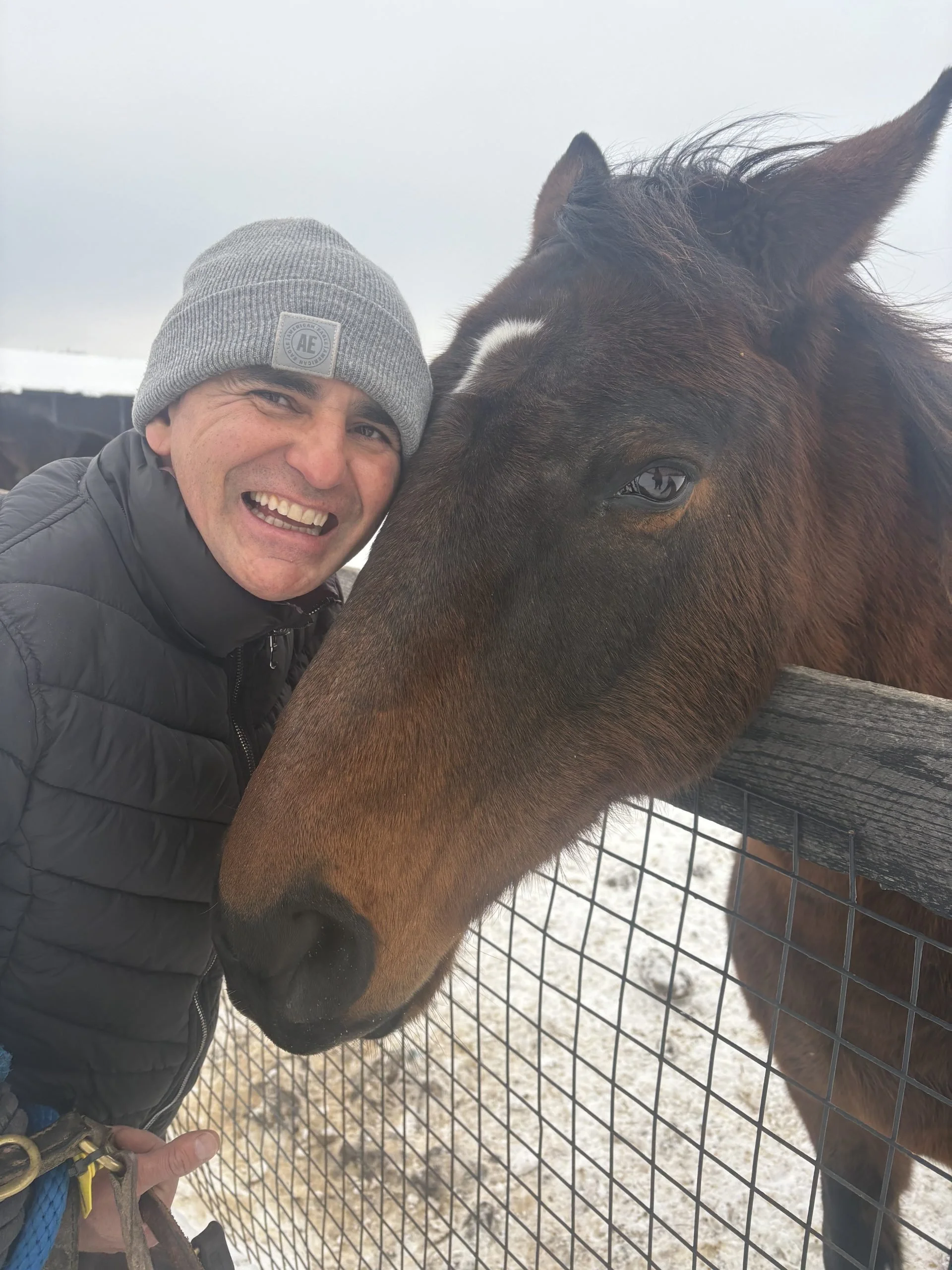
Horses Don’t Care About Your Achievements — They Care About Your Presence
We live in a world where people are celebrated for their doing — how much they achieve, produce, or endure. But when you step into a paddock with a horse, none of that matters. Horses don’t ask you for your résumé. They’re not interested in how many medals you’ve won, what your job title is, or how successful you appear to the world.
What they care about is something far more real — your presence.
The Horse Sees What We Try to Hide
Most of us carry emotions we’ve learned to hide — grief, anger, fear, sadness. Especially in high-performance environments like professional sports or leadership roles, there’s a silent rule: hold it together. Show strength. Stay in control.
But horses don’t buy into that.
They respond to what’s real — not what’s polished. If there’s tension in your body, if your breath is shallow, if your nervous system is dysregulated — they feel it. Not in a judgmental way, but as a reflection. Horses have an uncanny ability to bring to the surface what we’ve buried beneath layers of achievement, performance, or survival.
And science is catching up to what horse people have known for centuries.
What Research Says
A growing body of research is confirming the emotional intelligence of horses and the therapeutic value of equine-assisted experiences. For example:
• A 2022 study published in Frontiers in Psychology found that equine-assisted interventions significantly reduced symptoms of emotional suppression, anxiety, and depression in participants with trauma backgrounds.
• According to research from The International Journal of Environmental Research and Public Health, horses help regulate the nervous system, particularly through heart rate variability synchronization. When a person calms down and becomes more present, the horse’s heart rate can synchronize with theirs — a physiological marker of emotional attunement.
• A 2019 meta-analysis reported that equine therapy participants often described feeling “seen” for the first time — not by a person, but by the horse.
In other words: horses help people feel again. And for many, that’s the first step toward healing what was never allowed to surface before.
Presence Over Performance
What’s powerful about working with horses is that they give you feedback in real time. If you show up anxious, they might walk away. If you ground yourself, breathe, and connect, they come closer.
This isn’t about controlling the animal. It’s about regulating yourself.
And in that regulation, emotions that were locked away begin to thaw.
It’s common for people to cry during a session with a horse — not out of sadness, but from the release of long-held tension. I’ve seen athletes, trauma survivors, and high achievers finally take a deep breath — sometimes for the first time in years.
Because in that moment, there’s nothing to prove. There’s only presence.
My Own Experience
As a former professional jockey, I lived for performance. For years, I wore the mask of the competitor — strong, focused, successful. But underneath, I carried the weight of perfectionism, fear of failure, and unresolved emotional pain.
It was horses — not humans — who first helped me reconnect with my truth. Not in a therapy room, but in a quiet stall, when one simply stood beside me as I finally exhaled. That’s why I now guide others in the same process — not to teach them anything new, but to help them remember who they are beneath the armor.
An Invitation
If you’re tired of holding it all in…
If you’ve succeeded on the outside but feel disconnected on the inside…
If you’re ready to feel again, without having to explain anything to anyone…
Let the horse meet you where you are.
They don’t care about your success.
They care about your state.
And in their quiet, honest way, they’ll ask you the question that many of us avoid:
“Are you really here?”