
Equine Connection: Supporting Children with Autism, Down Syndrome, and Neurodivergence
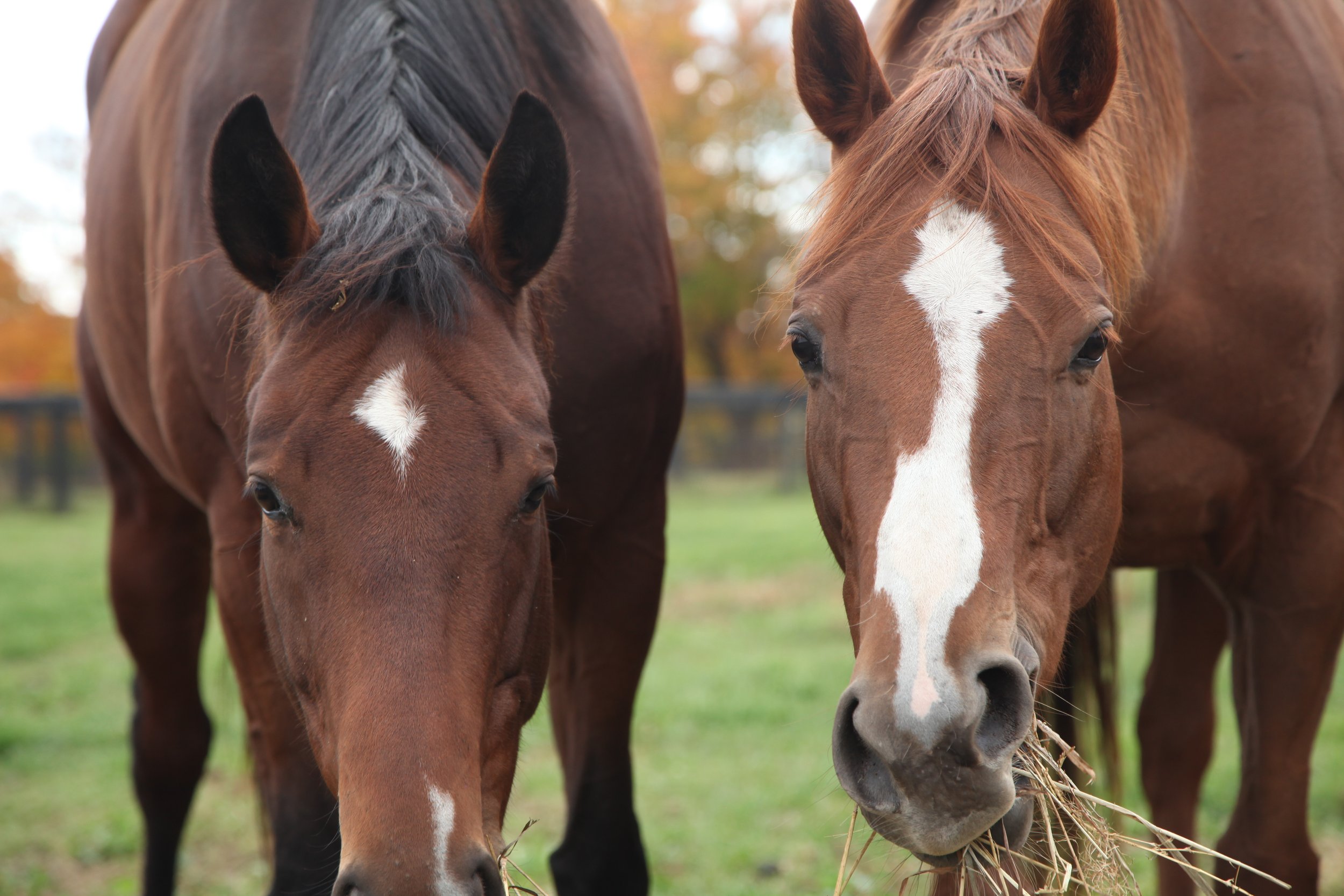
There is something gentle and profound that happens when a human stands beside a horse. Breath softens. Awareness settles. A sense of calm begins to take shape inside the body.
For autistic children, non-verbal and minimally verbal children, and children with disabilities - including children with Down syndrome, ADHD, sensory processing differences, and communication differences - this presence has both felt and measurable effects. Research in human-animal interaction is helping us understand how horses support emotional regulation, nervous system coherence, and connection.
Research That Shows Emotional Regulation and Social Engagement
Studies on interactions between humans and horses - including groundwork such as standing close, grooming, and slow, intentional connection - point to outcomes that align with what families often observe in real life.
Research published in Applied Sciences examined equine-assisted activities with children on the autism spectrum and found positive effects on social engagement and communicative behaviors during sessions. This study directly measured how children behaved and interacted when they spent time with horses, highlighting improved social responses in the context of these sessions.
Another study looked specifically at how human-horse interaction affects oxytocin and cortisol - two hormones tied to stress and social bonding. It found that when people stood near or gently stroked a horse, oxytocin levels increased while stress hormones remained stable. This suggests that the simple presence and calm touch in a human-horse interaction can support physiological states associated with connection and calm.
Nervous System Coherence, Calm, and Emotional Balance
Research on human-animal interaction - including studies that examine multiple species and physiological measures - shows that being in the presence of animals like horses can support physiological co-regulation between human and animal. This includes measurable patterns in heart rate and stress markers that reflect a shared experience of calm and coherence in interaction.
Other research looking more broadly at animal-assisted approaches involving horses found improvements in social functioning among children with autism following equine interaction, including sustained changes in engagement and social responsiveness across multiple studies reviewed.
Taken together, this research helps explain why many children show noticeable changes over time in ways that matter deeply in everyday life:
Emotional regulation - indicators like cortisol (a stress hormone) tend to stabilize in settings of calm human-horse interaction, while hormones associated with connection and safety (like oxytocin) can increase.
Social engagement - studies focused on children with autism report gains in relational behaviors and responsiveness as measured during sessions with horses.
Coherence and calm - research on physiological coupling between humans and animals suggests that shared states of calm can emerge in supportive, regulated interactions.
How Horses Support Individuals with Down Syndrome and Neurodivergent Individuals
What’s especially meaningful about this research is that it lends evidence to what is already felt. When a child pauses beside a horse, breathes more deeply, and experiences steady presence - over and over - that repeated experience supports the nervous system’s ability to settle. Over time, this can make a real difference in how a child feels and shows up in the world around them.
The horses we work with offer more than “an activity” - they offer a field of calm and coherence that research shows can support emotional ease, physiological regulation, and deeper engagement for autistic children and children with disabilities.
Horses offer particularly meaningful support for children and adults with Down syndrome as well. Time spent in calm, intentional groundwork with horses provides a consistent, predictable environment that helps the nervous system settle, while also offering rich sensory engagement through touch, movement, and presence.
Working with horses can help enhance emotional awareness and social engagement for people with Down syndrome. The gentle responsiveness of the horse encourages individuals to notice subtle cues, practice patience, and feel the effect of their own energy in a safe and supportive context. This nurtures confidence in their ability to communicate and connect, often revealing strengths that may not emerge in other environments.
Additionally, the heart-centered, grounded approach of equine work aligns well with the natural warmth, curiosity, and relational focus many people with Down syndrome exhibit. Horses reinforce these qualities by inviting attunement, steady attention, and presence, creating opportunities for individuals to deepen self-awareness and enjoy meaningful connection.
For neurodivergent individuals more broadly, including those with ADHD, sensory processing differences, and other developmental variations, horses offer a unique form of engagement that supports connection and self-awareness. The calm energy, steady rhythm, and responsive presence of a horse encourage focus, gentle regulation, and emotional attunement. Many neurodivergent children and adults show increased receptivity to social interaction and a greater sense of internal coherence after consistent time in equine groundwork, reinforcing not only their emotional well-being but their ability to connect with others in meaningful ways.
• Equine‑assisted activities with children on the autism spectrum (behavior and social engagement research)
👉 https://www.mdpi.com/2076-3417/13/13/7417
• Human‑horse interaction effects on oxytocin and cortisol levels (physiological evidence of connection & calm)
👉 https://pubmed.ncbi.nlm.nih.gov/40218299/
• Systematic review of animal‑assisted interventions improving social functioning in children with autism
👉 https://pmc.ncbi.nlm.nih.gov/articles/PMC9344573/
• Evidence of physiological co‑modulation during human‑animal interaction (shared calm / nervous system coherence)
👉 https://arxiv.org/abs/2510.10559
